
Sustainability demands in Microelectronics: Innovations for a Greener Industry
20 February 2026 | 11:00 - 12:30 (CET)
About
After introducing the HaloFreeEtch project in our very successful first webinar, our second webinar will focus on the sustainability challenges in microelectronics. Two contributions from leading research institutions in Europe will highlight why we need to become more sustainable in electronics production.
- Dr. Cédric Rolin from IMEC will discuss emerging strategies and innovations aimed at reducing the ecological footprint of semiconductor chip manufacturing.
- Prof. Edeltraut Guenther from UNU-Flores and TU Dresden will add her perspective as a globally recognized expert in environmental management and sustainability assessment. She will also introduce the new cluster of excellence REC2 which is now installed at TU Dresden to create the scientific basis of Responsible Electronics in the Climate Change Era.
- The third speaker, Dr. Gertrude Kignelman, will represent Centexbel, a Belgian competence centre for the European textile and plastics industries. She will add the perspective of another industry, the textile industry, on how it is moving away from halogen-containing substances through innovation.
Agenda
- 11:00 – 11:15 – Introduction to the HaloFreeEtch webinar | Jörg Schuster, TU Chemnitz and Fraunhofer ENAS, coordinator of HaloFreeEtch
- 11:15 – 11:35 – The footprint of semiconductor chip manufacturing | Cédric Rolin, IMEC
- 11:35 – 11:55 – Perspectives on responsible electronics and introduction to the cluster of excellence REC2 | Edeltraud Günther, UNU-Flores and TU Dresden
- 11:55 – 12:15 – Halogen-free textiles: challenges and opportunities for cross-sectoral innovation | Gertrude Kignelman, Centexbel
- 12:15 – 12:30 – Q&A Session | All
Speakers
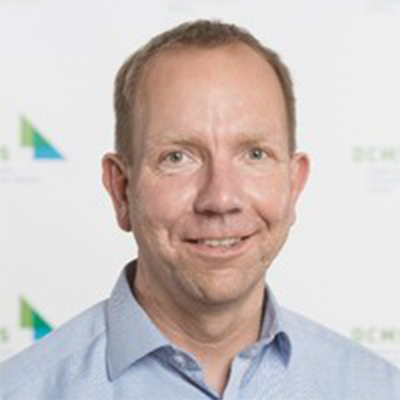 Abstract:
In his introductory talk, Jörg Schuster, the coordinator of the HaloFreeEtch project will give an overview of our project. He will introduce the background and the concept of HaloFreeEtch and the role of the partners in the consortium. By this we will outline, how we will contribute to make etching in semiconductor and microfabrication industry more sustainable. He will also outline the planned contents of our webinar series, consisting of eight webinars to be hold over the next years.
 Bio:
Bio:
Cédric Rolin is manager for imec’s Sustainable Semiconductor Technologies and Systems (SSTS) Program. He holds both an M.S. and a Ph.D. in materials science from Université Catholique de Louvain and spent 15 years advancing research in flexible electronics and nanoimprint lithography at imec and the University of Michigan. Over the past four years, Cédric has focused on driving sustainability in the semiconductor industry, with a particular emphasis on assessing and reducing the environmental footprint of manufacturing processes.
Abstract:
Semiconductor chip manufacturing is a resource-intensive process with significant environmental implications. This talk explores the sustainability challenges inherent in fabrication, including high energy demands for processing, high-GWP GHG emissions, extensive water consumption, and the use of chemicals and rare materials that contribute to resource depletion and waste generation. It examines the environmental impact across key stages of production—from raw material extraction to cleanroom operations—and discusses emerging strategies and innovations aimed at reducing the ecological footprint of semiconductor manufacturing for various chip technologies such as logic, DRAM, 3D-NAND.
Bio:
Prof. Edeltraud Guenther is the Director (D2) of United Nations University Institute for Integrated Management of Material Fluxes and of Resources (UNU-FLORES).
Prof. Guenther is a globally recognised expert in environmental management and sustainability assessment. She assumed the position of Director of UNU-FLORES in Dresden, Germany on 1 September 2018.
Prof. Guenther’s research focusses on sustainability management, environmental accounting, and management control systems, with an emphasis on corporate responsibility, life cycle assessment, resilience, and sustainability assessment. As UNU-FLORES Director, Prof. Guenther is a vocal advocate for “Advancing the Resource Nexus”, which is also reflected in the Institute’s mission to create meaningful impact across the scientific landscape, and to champion the Resource Nexus as a vital scientific perspective.
Prof. Guenther received her doctorate in Environmental Accounting from the University of Augsburg and has held the position of Chair of Business Management, Sustainability Management and Environmental Accounting, at the Faculty of Business and Economics at Technische Universität Dresden (TU Dresden) since 1996. She founded the Centre for Performance and Policy Research in Sustainability Measurement and Assessment (PRISMA) in 2016 and has acted as the Centre’s Chair since then. As an international authority on environmental resource management, Prof. Guenther has held Visiting Professorships at Namibia University of Science and Technology (NUST), Kobe University, and University of Virginia.
In addition to her involvement on the editorial boards for a variety of scientific journals, Prof. Guenther is Editor-in-Chief for the Sustainability Management Forum (2015), as well as subject editor of the International Journal of Life Cycle Assessment (2016). In her own work, Prof. Guenther most notably poses the question “How does it pay to be sustainable?” and is a proponent for promoting the financial benefits of sustainability; this is demonstrated through her significant publication record of over 200 journal articles, and her contributions to several book chapters.
As part of strengthening the connections between UNU-FLORES and the wider United Nations network, Prof. Guenther was also one of the establishing Directors and the first Chair for UNU Water Network, which was initiated in 2019. In 2020, she was appointed UNU Senior Official for the Environmental Management Group (EMG).
Abstract:
Our society is dependent on electronics, which are increasingly integrated into every aspect of our lives. Electronics are essential for our continued progress, providing solutions to global challenges like climate change. At the same time, electronics are also part of the problem: Their already vast energy needs continue to grow, and their ever-shorter replacement cycles drive enormous consumption. The REC² Excellence Cluster aims to create the scientific basis for the electronics of the future: new material platforms, component concepts and integrated systems with which responsible electronics can be realized in an ecologically, economically and socially sustainable way.
Some of the key questions are: “How can life cycle sustainability assessment contribute to reducing the use of environmental resources (material, energy, water, climate, biota, soil, space, waste) and associated impacts while considering their interconnectivity and a fair distribution of resources globally, including particularly the Global South?
How can the Resource Nexus approach for sustainability research contribute to conceptualisation, design, realisation, usage and end-of-life treatment of electronic products?”
Combined with the Resource Nexus approach, we study the environmental resources responsible electronics consume to understand interdependent resource streams in interlinked economies, ecosystems, and communities.
 Bio:
Bio:
Gertrude Kignelman is a researcher specializing in Coating & Finishing Technologies at Centexbel, where she has worked since 2021 with a strong focus on sustainability and materials innovation. She holds a PhD in Chemical Engineering from KU Leuven and supports innovation in the textiles and plastics sectors through her work at the intersection of R&D, patent advisory, and standards development. Gertrude is passionate about helping companies translate regulatory and technical challenges into practical, future‑proof solutions — and is always open to the next project collaboration.
Abstract:
Across the globe, regulations are driving the phase‑out of halogen‑containing substances in textiles, particularly in Europe. This talk explores the technical and practical challenges faced by the textile sector as it moves away from halogens and highlights how industry players are turning regulatory pressure into opportunities for material and process innovation. By examining this transition, the presentation aims to offer insights that may inspire similar strategies in other industries.